


Pergola Drainage Explained: Gutters, Posts and Rainwater Runoff
A closed louvered roof keeps rain off the patio. The water then runs from the louvers into channels, down through the posts and onto the ground. A blocked or poorly planned path sends water over the frame, into puddles at the posts or toward the house. Below we follow rainwater from roof to ground.

[Show/Hide]
How Does Water Drain From a Louvered Pergola?
Most louvered models move water in this order: closed louvers → roof channels → integrated gutters → passages inside the posts → outlets at post bases → ground or a planned drainage solution.
Louver profiles guide water toward their ends. Frame channels will drain it into the corners and the posts. Details vary by manufacturer and model, so check the product drawings for the exact route in your pergola. Having a labelled diagram showing this path may help in discussions with the installer.
Louvered pergola drainage needs planning before installation, because the outlets decide where all roof water lands during a storm. Changing the location of the outlet becomes difficult once the posts have been installed. Decide beforehand which corners will receive the water and which surface will get it. With custom aluminum pergolas, outlet positions can be planned around doors, paths and seating areas.
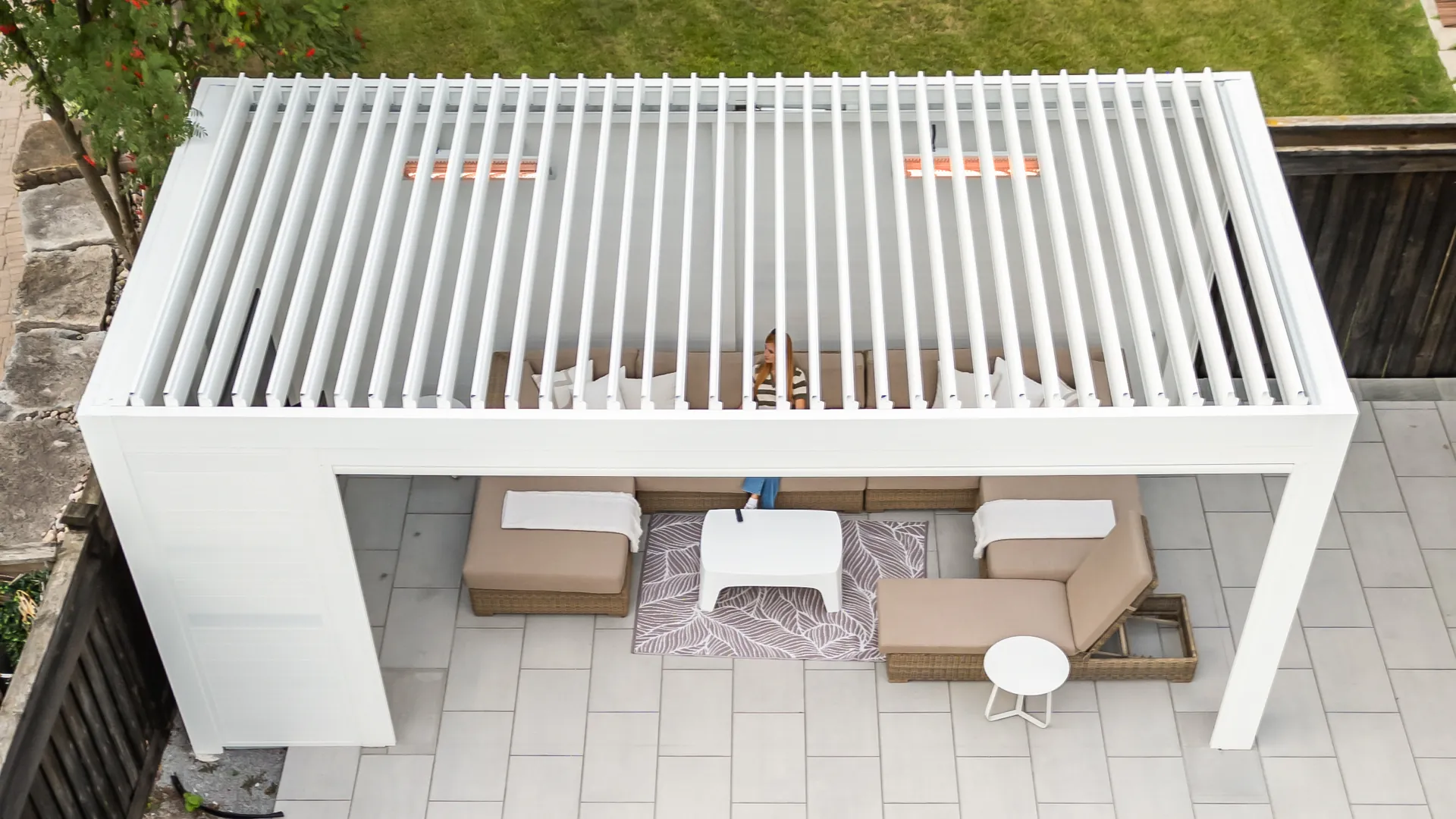
How Integrated Gutters and Pergola Posts Manage Rainwater
Roof, gutters and posts form one pergola drainage system. Each part depends on the next staying clear.
Louvers, Roof Channels and Hidden Gutters
Closed adjustable aluminum louvers overlap and seal at the joints and channel water away laterally through drainage gutters. Many designs use hidden gutters built into the beams, with no separate perimeter gutters outside.
A pergola gutter system works when gutters are continuous, properly assembled and not clogged. Leaves, seeds, and pine needles accumulate at the corner areas and slow the flow. Pergolas near maples, oaks or pines need more frequent cleaning in fall. Water streaks on the outer faces of the beams often show where a gutter overflows. It is advisable not to open the louvers immediately after the rain; the excess water in the channels should run out before opening the roof. Motorized models with rain sensors can close the roof automatically; the rain sensor should not be obstructed. Rainwater collection is different from full waterproofing: a louvered pergola has open sides and is never sealed like an enclosed room.
Internal Post Drainage and Water Outlets
From the gutters, water usually drops through hollow support posts. Pergola post drainage hides downspouts from view. Homeowners should know:
- which posts carry water;
- where water exits each post;
- whether outlets sit above the finished surface;
- whether landscaping, decking or edging could cover them;
- how water moves away from the post onto lawn, gravel or paving.
LOUSOL pergola kits show one arrangement: the 10×12 KIT drains through all four posts, according to its product information. Custom configurations can differ, so check outlets against the drawings for each design.
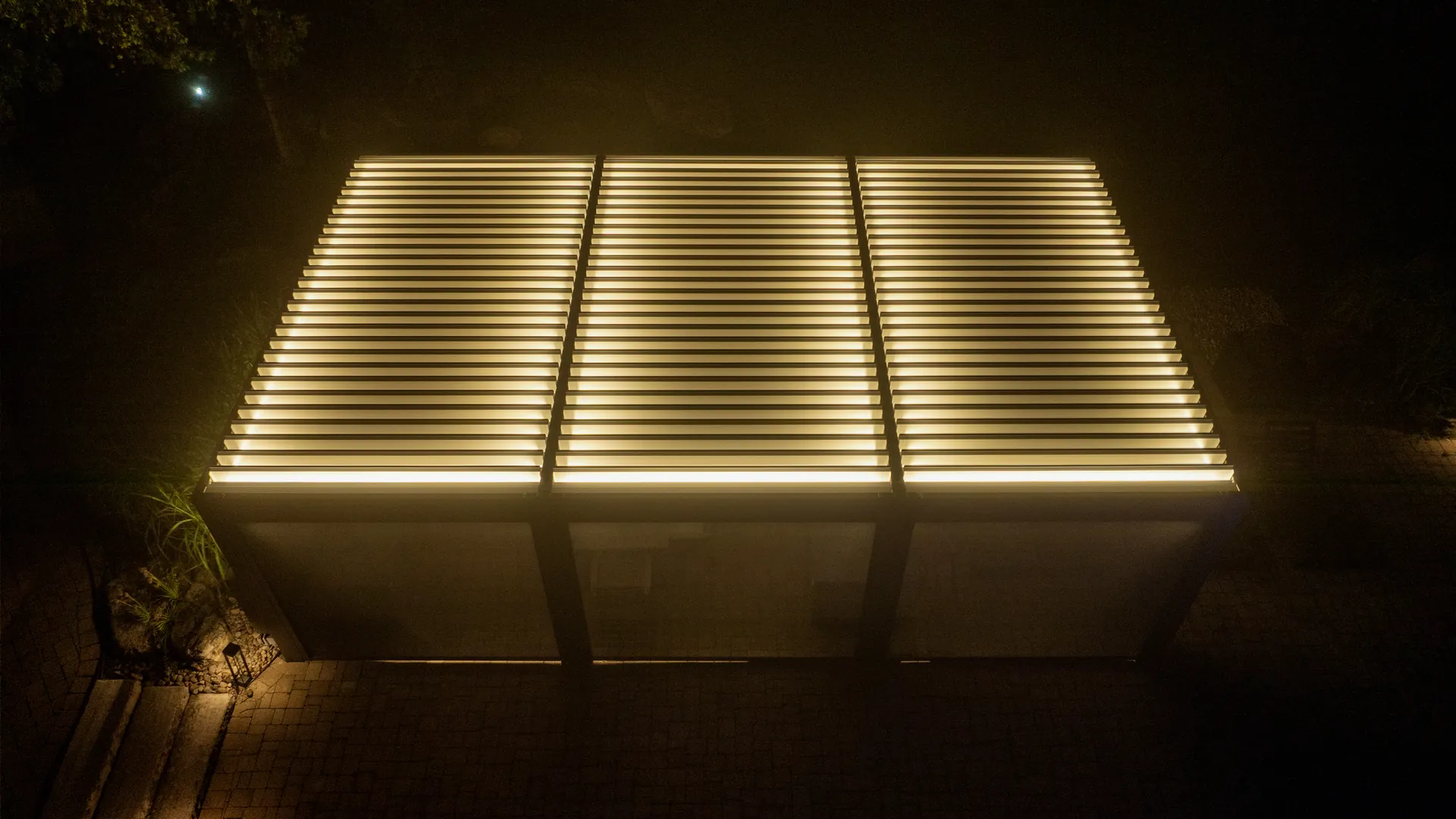
Where Should Pergola Rainwater Go After Leaving the Posts?
The structure ends at the post base. From there, pergola rainwater runoff becomes part of site drainage. Patio grading, hardscaping and nearby buildings decide its direction. A house downspout emptying next to a pergola post adds more water to the same spot.
Trouble starts when water flows toward house foundations or basement windows, across daily walkways, into existing low spots or onto a neighbour’s lot. In Canadian winters, runoff crossing a path at night can freeze into a slipping hazard by morning. Solutions depend on the site: grading away from the house, splash pads or gravel at outlets, or professionally designed drainage such as a dry well or a drain line to a suitable discharge point. Stormwater rules are set locally. Connect pergola outlets to a sewer or storm system only after checking requirements and getting approval. Our guide on how to plan a custom aluminum pergola covers outlet placement together with other pre-installation decisions.

Common Pergola Drainage Problems in Canadian Weather
Most problems have a few causes. Leaves and debris block gutters, and water overflows at frame edges. Mulch, soil or new paving covers post outlets, often when the patio surface is raised after installation. Bare soil at an outlet can wash out quickly. Water discharges in the wrong place and pools around post bases, wearing down the surface near anchors. Wind-driven rain enters through open sides with the roof closed. In late fall and early spring, water freezes in channels and outlets, and ice forms at corners. Read the manufacturer’s instructions before operating louvers under snow or ice. Incorrect assembly and poor grading around the pergola add to the list.
Separate pergola issues from property issues. Overflow from a clean, correctly assembled gutter in an extreme downpour differs from a leaking connection. Side rain during a storm is not a drainage defect. Drops under the louvers on cool, humid mornings are usually condensation. Heavy rain, wind and winter conditions affect every outdoor structure, and no pergola stays completely dry in all weather. Our page on louvered pergola rain protection explains the limits of roof protection.
Pergola Drainage Inspection and Maintenance Checklist
Regular checks keep the pergola drainage system working:
- Inspect roof channels and gutters for leaves and debris, especially in fall.
- Check accessible outlets at post bases for blockages.
- During ordinary rain, watch the water path from a safe spot.
- Look for pooling near posts, walkways and the house.
- Check nearby gravel, mulch or pavers for erosion and movement.
- Look for drips or stains at frame connections.
- Follow the manufacturer’s seasonal maintenance instructions.
Call a professional for leaks at structural connections, water backing up inside posts, ice damage or pooling after every rain. Leave removal of structural parts and changes to the drainage path to the installer. Record the date and weather of each problem to help find the cause. Photos of overflow or pooling during rain are even more useful to the installer.
Plan drainage from the start, together with post positions and foundations. LOUSOL builds water management into its louvered systems and can adapt the drainage layout to your site. To discuss outlets and runoff for your property, contact LOUSOL.
Frequently Asked Questions About Pergola Drainage
How does water drain from a louvered pergola?
Most louvered models move water in this order: closed louvers, roof channels, integrated gutters, passages inside the posts, outlets at the post bases, and then the ground or a planned drainage solution. Details vary by manufacturer and model, so the product drawings show the exact route in your pergola.
Does a louvered pergola have gutters?
Yes. Closed louvers overlap, seal at the joints and channel water sideways into drainage gutters. Many designs use hidden gutters built into the beams, with no separate perimeter gutters outside. The gutter system works when the gutters are continuous, properly assembled and not clogged.
Do pergola posts carry rainwater?
Usually, yes. From the gutters, water drops through hollow support posts, which hides the downspouts from view. Check which posts carry water, where it exits each post and whether the outlets sit above the finished surface. For example, the LOUSOL 10×12 KIT drains through all four posts, according to its product information; custom configurations can differ.
Where should rainwater go after it leaves the pergola posts?
Away from house foundations and basement windows, daily walkways, existing low spots and a neighbour’s lot. Depending on the site, the answer can be grading away from the house, splash pads or gravel at the outlets, or professionally designed drainage such as a dry well or a drain line to a suitable discharge point. Stormwater rules are set locally, so connect outlets to a sewer or storm system only after checking requirements and getting approval.
Why does water drip or overflow from a louvered pergola?
Common causes are leaves and debris blocking the gutters, outlets covered by mulch, soil or new paving, ice in channels and outlets in late fall and early spring, incorrect assembly and poor grading. Not every drop is a defect: side rain during a storm is not a drainage defect, drops under the louvers on cool, humid mornings are usually condensation, and overflow from a clean, correctly assembled gutter in an extreme downpour differs from a leaking connection.
How do you maintain a pergola drainage system?
Inspect roof channels and gutters for leaves and debris, especially in fall, check the accessible outlets at the post bases, watch the water path during ordinary rain and look for pooling near posts, walkways and the house. Follow the manufacturer’s seasonal maintenance instructions, and call a professional for leaks at structural connections, water backing up inside posts, ice damage or pooling after every rain.
Checkout more
helpful articles
How to Compare Pergola Quotes in Canada
A homeowner’s checklist to compare pergola quotes line by line:...
How to Choose Pergola ZIP Screens: Fabric, Privacy and Controls
How to match pergola ZIP screens to your space: fabric...
Manual vs Motorized Pergola ZIP Screens
How manual and motorized pergola ZIP screens compare on controls,...

Pergola Installation vs DIY: Which Saves You Money?
When DIY pergola installation genuinely saves money, when a professional...

Restaurant Patio Covers That Increase Revenue
A practical framework to estimate how much revenue a covered...


Best DIY Aluminum Pergola Kit Features
The features that make a DIY aluminum pergola kit easy...
How to Plan a Custom-Size Aluminum Pergola
How to plan a custom-size aluminum pergola: measurements, footprint, post...

